Building Stronger Youth Support Networks Through Cross-Sector Collaboration
Pulse of Tomorrow's Junior Council carried a motion calling for stronger collaboration between schools, community organisations, and ground-up groups. The aim is to create more connected, youth-friendly support and development pathways across school and community settings.
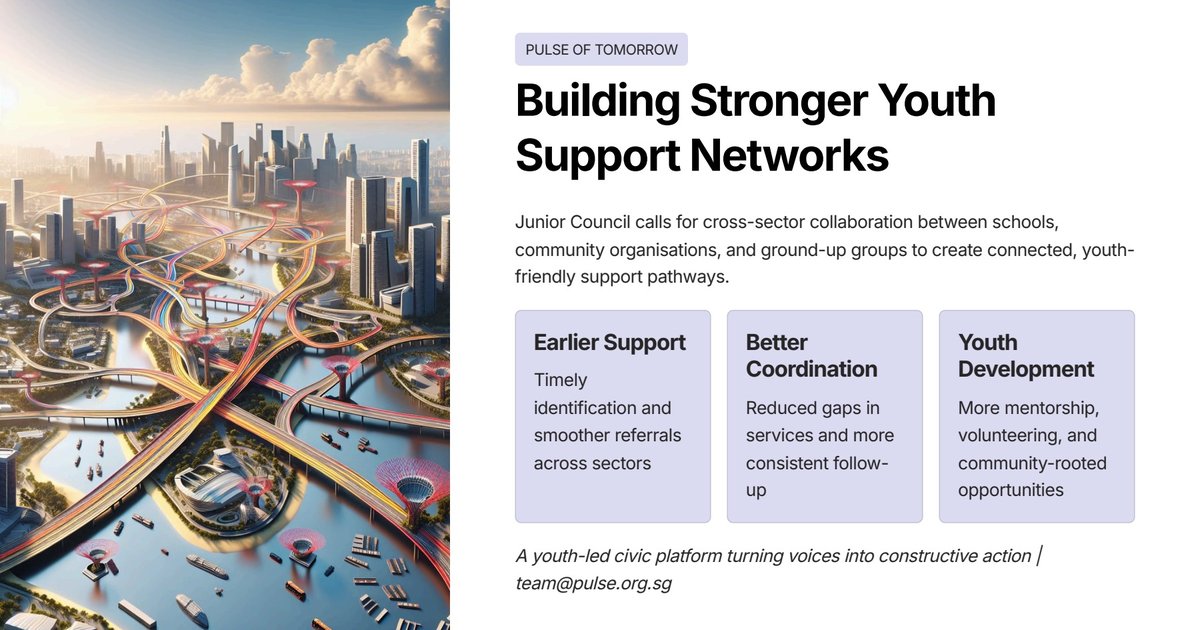
Pulse of Tomorrow's Junior Council has carried a motion calling for stronger collaboration between schools, community organisations, and ground-up groups. The aim is straightforward: reduce gaps in support by making it easier for youths to access timely help, trusted adults, and meaningful opportunities across the places they already spend time.
For many youths in Singapore, school is the main touchpoint for learning and support. But challenges do not stay within school gates. Stress, family pressures, mental health concerns, and social isolation can show up in multiple settings, and youths often have to navigate services on their own. Stronger cross-sector collaboration helps ensure that a young person is not left to figure things out alone when their needs span education, wellbeing, and community support.
This matters because Singapore has been strengthening community-based support and preventive approaches, including initiatives that bring services closer to residents and families. When schools, social service agencies, and community partners work in sync, it supports earlier identification of needs, smoother referrals, and more consistent follow-up. It also allows youth development efforts to go beyond one-off programmes and build longer-term pathways that support learning, wellbeing, and belonging.
The Junior Council is pushing for practical collaboration that youths can feel. This includes clearer partnership channels between schools and community partners, better coordination around youth-friendly help-seeking, and more opportunities for ground-up groups to complement formal support with peer-led initiatives, mentorship, and community projects. Done well, collaboration can reduce duplicated efforts and help volunteers and practitioners focus time and resources where they are most needed.
There is also a strong youth development upside. When community organisations and ground-up groups connect with schools, students can access richer service-learning, mentorship, and volunteering options that are rooted in real local needs. This aligns with national priorities around supporting mental wellbeing in schools and strengthening youth engagement, while giving young people more chances to build skills, relationships, and a sense of agency.
Ultimately, cross-sector collaboration is about making support easier to find and more joined-up, so that every youth has a stronger safety net and more pathways to thrive. The Junior Council will continue to champion youth-informed, community-grounded approaches that connect people and partners rather than leaving support fragmented.
Join Pulse of Tomorrow, a youth-led civic platform that turns youth voices into constructive action through dialogue, policy engagement, and community initiatives. For media queries, contact [email protected] or call +65 6042 5410.