Neurodivergence at Work: Moving Past Stereotypes, Building Fairer Workplaces in Singapore
Neurodivergent youths in Singapore face workplace stereotypes that can limit opportunities and belonging. Pulse of Tomorrow's Junior Council is gathering youth experiences and pushing practical, fair workplace norms that help people be assessed on impact, not conformity.
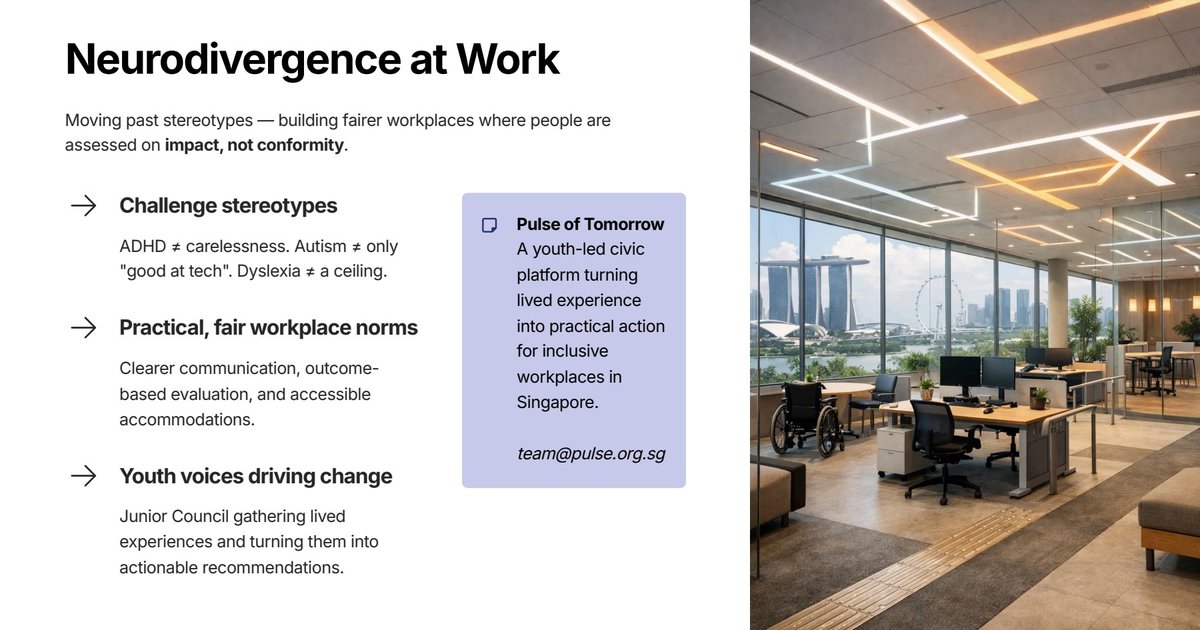
Neurodivergent people in Singapore are increasingly visible in schools, communities, and workplaces. Yet at work, stereotypes still shape how colleagues and supervisors interpret behaviour: that someone who is autistic is always “good at tech” but “bad with people”, that ADHD is just being careless, or that dyslexia means someone is not suited for roles that involve reading and writing. These shortcuts are not only inaccurate. They can also limit hiring, progression, and day-to-day belonging.
This matters for youths because your early career years are when you build confidence, work identity, and networks. Many young people are also entering workplaces with higher awareness of mental health and learning differences, and greater willingness to ask for support. But stigma can make disclosure feel risky, and unclear processes can make accommodations feel like a personal favour instead of a fair workplace practice.
What does “good support” actually look like? In Singapore, national guidance increasingly points towards practical adjustments that help people contribute consistently. The Tripartite Guidelines on Fair Employment Practices set expectations that employers should recruit and manage employees on the basis of merit and treat employees fairly. At the same time, SG Enable’s resources on disability employment highlight that job redesign and workplace accommodations can help match tasks to strengths and reduce unnecessary barriers.
Pulse of Tomorrow's Junior Council is focusing on how stereotypes show up in everyday work routines. Not just in hiring interviews, but in onboarding, performance reviews, team communication norms, and open-plan office culture. We are gathering youth stories about what helped and what harmed, then translating them into simple recommendations that can be used by supervisors, HR teams, and student leaders running internships and project teams.
If you are a youth, you can make a difference even without a leadership title. Try clearer communication norms in group work. Offer agendas and written follow-ups. Normalise asking for preferred working styles. If you are managing interns or juniors, be explicit about outcomes and timelines, and avoid interpreting differences in eye contact, tone, or pacing as attitude. These are small shifts, but they change whether someone is assessed on impact or on conformity.
Singapore has also been moving towards more inclusive employment for persons with disabilities, including efforts to support job matching, training, and employer readiness. For neurodivergent youths, the goal is not special treatment. It is equal access to doing good work, being evaluated fairly, and growing in careers without needing to mask who they are every day.
If you want to help shape more inclusive workplaces, join Pulse of Tomorrow, a youth-led civic platform where young people turn lived experience into practical action. For media queries, contact [email protected] or call +65 6042 5410.