Phone-free learning time: A practical norm to help students focus, feel better, and connect
Youth voices were heard. Our feedback on phone-free learning time is now reflected in schools. This is what constructive, youth-led policy engagement looks like.
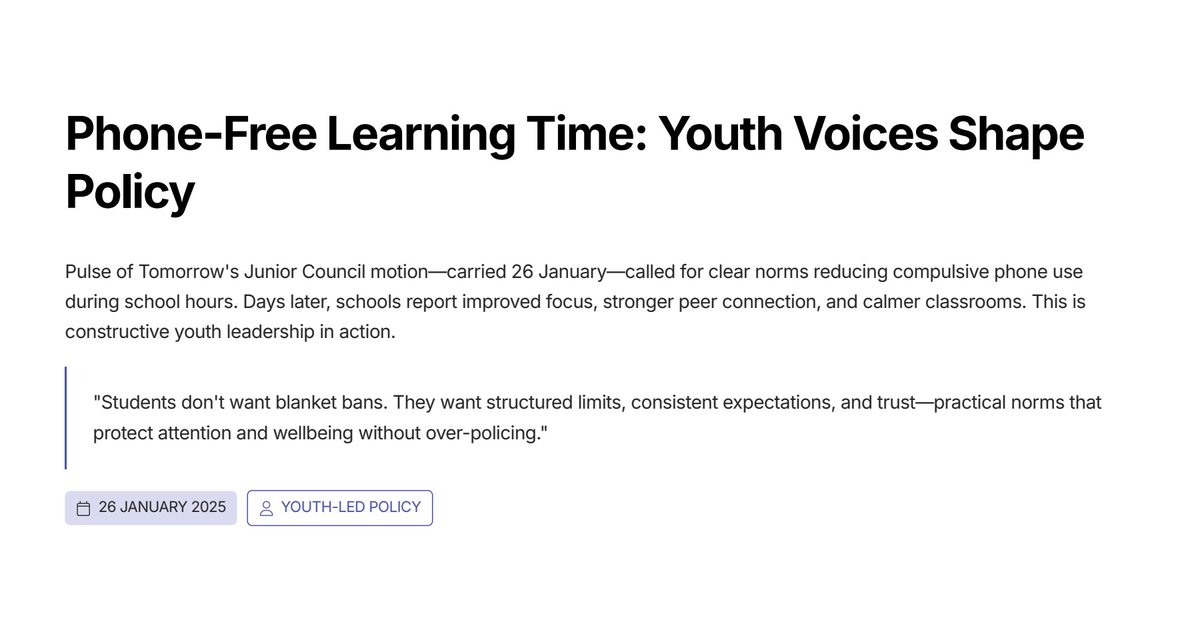
Pulse of Tomorrow’s Junior Council has carried a motion raised by Eunice Hong calling for schools to set clear norms that reduce compulsive phone use during the school day, such as designated phone-free learning time. The principle is simple. We want learning spaces where attention is protected, and where students can build healthier digital habits without feeling like they are fighting their phones alone.
This motion was carried on 26 January. Just days later, national reporting showed that many of the same ideas youths had raised are already playing out on the ground. That alignment is not accidental, and it matters.
Why this matters for youths in Singapore
For many students, the phone is not just a tool. It is a constant pull. Notifications, group chats, and short-form content do not stop at the classroom door. When they follow students into lessons and breaks, focus becomes harder to sustain, stress can rise, and sleep routines often suffer.
Youths today are growing up in an always-on environment. IMDA’s Annual Survey on Infocomm Usage in Households and by Individuals highlights how pervasive smartphone access and internet use are in Singapore, particularly among younger users. This makes it urgent to establish healthier norms in the places where youths spend most of their day.
From youth feedback to lived outcomes
On 5 December, Pulse of Tomorrow submitted youth feedback to the Ministry of Education on its upcoming policy on phone use in secondary schools. Through consultation with students aged 13 to 17, a clear position emerged. Youths did not support a full blanket ban. Instead, they called for structured limits during learning time, reasonable flexibility outside lessons, and approaches that prioritise trust, wellbeing, and practicality over over-policing.
On 30 January, CNA reported that the smartphone ban has led to more student interaction, improved focus in class, and calmer social environments, while also noting that a small minority still flout the rules. Teachers described the policy as easier to enforce when expectations are consistent, and students shared that having phones “out of sight and out of mind” made it easier to concentrate.
This reflects exactly what youths had raised earlier. Clear norms help most students. Over-enforcement risks resistance. Behaviour change works best when rules are consistent, fair, and widely understood.
What “phone-free learning time” can look like
This is not about demonising technology or pretending phones have no value. It is about agreeing on simple, workable boundaries that make school hours more conducive to learning.
Schools already have structures for student wellbeing and discipline. A norm like phone-free learning time can be implemented in a supportive way, for example:
- Phone-free periods during lessons and assemblies, with clear exceptions for learning activities.
- Storage routines that reduce temptation and habitual “just checking”.
- Consistent expectations across classrooms, so students are not negotiating different rules from teacher to teacher.
The CNA report shows that when these systems are clear, most students adapt quickly.
Implications for learning and wellbeing
Online experiences affect student safety and mental wellbeing, from cyberbullying to exposure to harmful content. MOE has stated that it works with schools to provide cyber wellness education so students can navigate the digital world safely and responsibly.
Reducing compulsive phone use during school hours complements these efforts. It lowers constant digital exposure, supports sustained attention, encourages face-to-face interaction, and makes it easier for students to seek help when something goes wrong.
Community impact: beyond “individual discipline”
When compulsive phone use becomes normalised, it affects group dynamics. CNA’s reporting shows that without phones, canteens are livelier, students talk more, and social interaction increases. At the same time, the presence of a small minority who try to evade rules reinforces why clear, shared norms matter.
These norms support teachers, reduce friction between students, and reassure parents that school time is protected for learning rather than constant digital engagement.
Youth leadership, done properly
This outcome did not come from outrage or absolutism. It came from listening, organising youth feedback, and translating lived experience into practical, policy-ready ideas.
Norms work best when students are part of shaping them. Youth leadership is not about rejecting rules, but about making them workable, fair, and grounded in reality.
Pulse of Tomorrow will continue to engage youths and institutions to ensure that policies affecting young people are informed by those who live with them every day.
If you care about creating healthier digital habits in school, join Pulse of Tomorrow, a youth-led civic platform where young people turn ground realities into constructive proposals and community action.
For media queries, contact [email protected] or call +65 6042 5410.
Carried on 26 January.
DigitalWellbeing #StudentWellbeing #EducationSG #CyberWellness #YouthVoices