Stalking: Strengthen the reporting systems youths already use, not build new ones
Pulse of Tomorrow’s Junior Council carried a motion moved by Yeo Min Jie Jay to strengthen existing stalking reporting systems instead of creating new ones, so youths can access clearer, faster, and more trusted help. The focus is on usability, early intervention, and community safety.
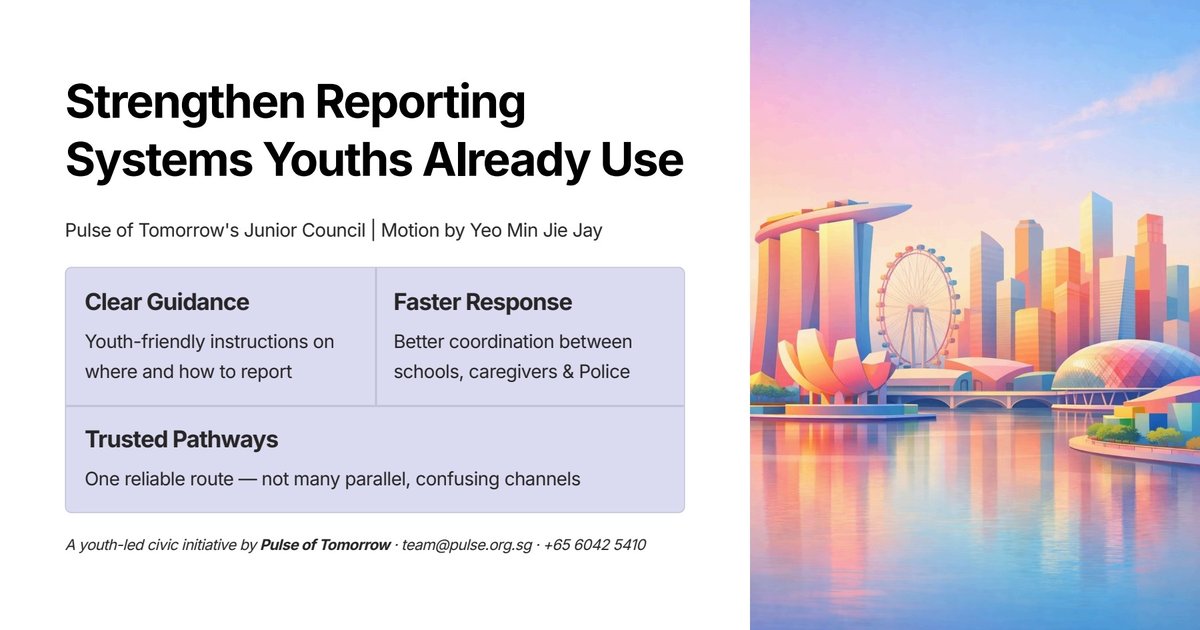
Pulse of Tomorrow's Junior Council carried a motion moved by Yeo Min Jie Jay to improve the effectiveness of existing stalking reporting systems rather than create new systems. The message is practical: when someone is scared, stressed, or unsure, the priority is a response that is clear, fast, and consistent, not another new channel that people may not know or trust.
Why this matters for youths in Singapore
For youths, stalking can start in everyday spaces: school, tuition, part-time work, public transport, or online group chats. It can blur into repeated unwanted contact, monitoring, threats, or the misuse of personal information. Left unchecked, it can escalate and affect mental health, attendance in school, and a young person’s sense of safety. Singapore has laws against harassment and stalking, but a youth’s real experience often hinges on whether they know where to go, what to say, what evidence to keep, and whether they will be taken seriously.
The underlying problem: access is not the same as usability
Singapore already has pathways for help, including Police reports and the Protection from Harassment Act framework. But “existing” does not always mean “easy to navigate”, especially for students and first-time reporters. If the process feels confusing, slow, or intimidating, youths may delay reporting until the situation worsens. That is why system effectiveness matters: clearer guidance, better coordination, and victim-centred handling can make the difference between early intervention and prolonged harm.
What improving existing systems can look like
The Junior Council’s position supports strengthening what is already in place so more youths actually use it. Practical improvements include: - Clear, youth-friendly instructions on where to report different scenarios (online, in-school, outside school) - Consistent advice on evidence collection, such as saving messages and logs - Better handoffs between schools, caregivers, and Police where appropriate, so victims do not have to retell the story repeatedly - Stronger awareness of legal protections and available support for those facing harassment or stalking
Community impact: safety and trust
When reporting works, it builds trust in institutions and makes it easier for friends, parents, and educators to step in early. When it does not, youths may normalise harmful behaviour, withdraw socially, or resort to unsafe self-management. Improving existing systems is also a way to reduce confusion: one reliable path, well explained, is often safer than many parallel ones.
Our commitment as a youth-led council
Pulse of Tomorrow's Junior Council is using this motion to guide our youth outreach and civic engagement work. We are focusing on helping youths understand their options, how to seek help early, and how to support peers responsibly while avoiding vigilantism. We also encourage youths to familiarise themselves with what the Police and national channels already provide, so help-seeking becomes a default, not a last resort.
If you care about safer communities and practical youth advocacy, join Pulse of Tomorrow, a youth-led civic platform where young Singaporeans turn real issues into constructive action. For media queries, contact [email protected] or call +65 6042 5410.